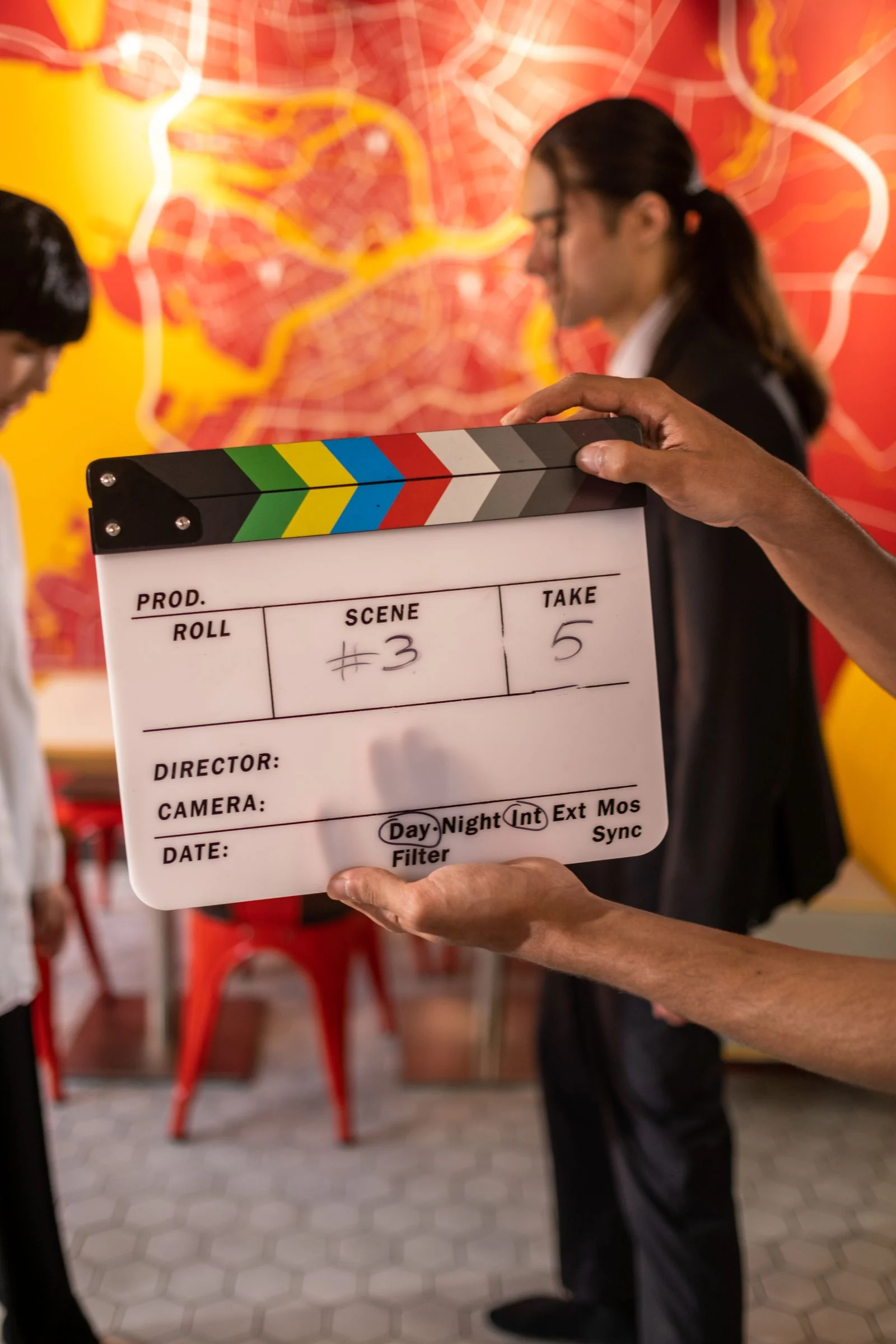
Identify the essential information
Write down what the viewer must understand, and separate it from what they might enjoy discovering. If the essential information exists only in a voiceover, consider how an action, a title or the sequence itself could carry it. This does not mean turning every spoken sentence into text. It means deciding which pieces of meaning need a second route.
Make titles part of the frame
Text needs time, contrast and space. Design it alongside the image rather than placing it over whatever area happens to be empty at the end. Check the smallest intended screen and keep important words clear of interface overlays. A short line that can be read comfortably is more useful than a paragraph that technically fits but disappears before anyone can absorb it.
Caption with care
Captions help more people follow a film, and they deserve the same attention as other delivery elements. Review names, punctuation, timing and line breaks. Avoid splitting a phrase where it becomes difficult to read, and make sure the caption does not obscure a meaningful action. An automatic transcript can be a starting point, but a person still needs to check the result.
Keep sound worth turning on
Planning for silent viewing is not a reason to neglect the soundtrack. Atmosphere, performance and music can add another layer when a viewer chooses to listen. Review both versions of the experience: once with the sound off, once with full attention to it. The image should carry the central thought, while the sound makes spending more time with the film worthwhile.